Palace Construction Techniques
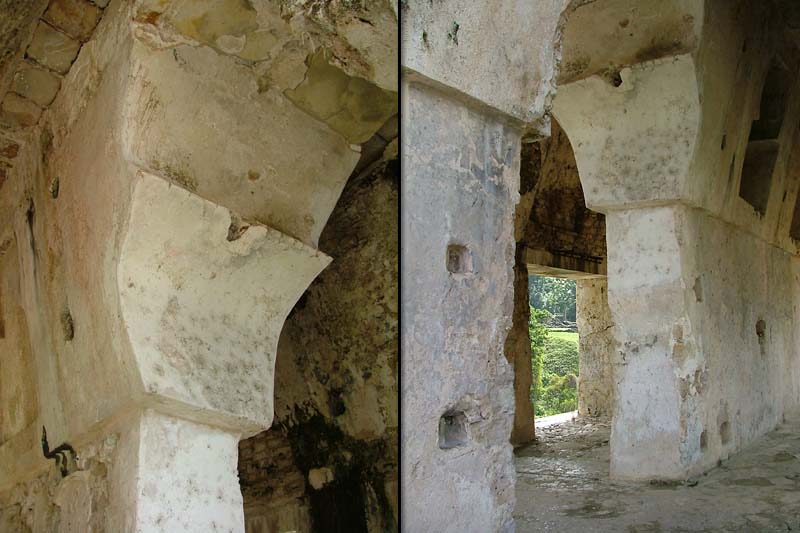
House A was commissioned by Pakal the Great and dedicated in 668 AD
Palenque Palace Construction Techniques exemplified in House A of the Palace.
Early Classic Petén masonry was clumsy and heavy, weighty roofcombs leaving little interior space. At Palenque a different aesthetic prevailed, and its architects set corbeled vaults parallel to one another, with a light, cut-out roofcomb over the central wall.
Mary Ellen Miller, The Art of Mesoamerica from Olmec to Aztec, p. 124
Parallel corbeled vaults

Parallel corbeled vaults gives lightness to the interior rooms.
Not only did this allow for greater interior space, but it also stabilized the whole construction, and it is partly because of this innovative technique that Palenque architecture is so well preserved today.
Solid mass gave way to a web-like shell for the first time in Mesoamerican architectural history.
Mary Ellen Miller, The Art of Mesoamerica from Olmec to Aztec, p. 124
Beautiful & functional cutouts
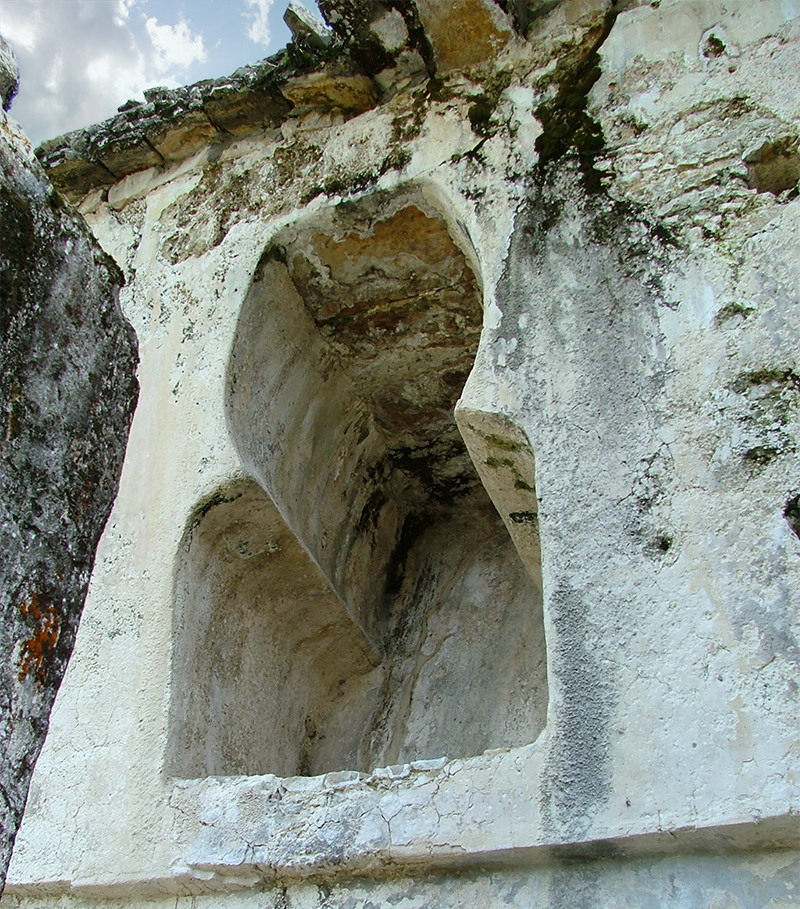
These beautiful niches lightened the weight of the arch, making possible the large airy rooms characteristic of Palenque.
Never used in exterior walls
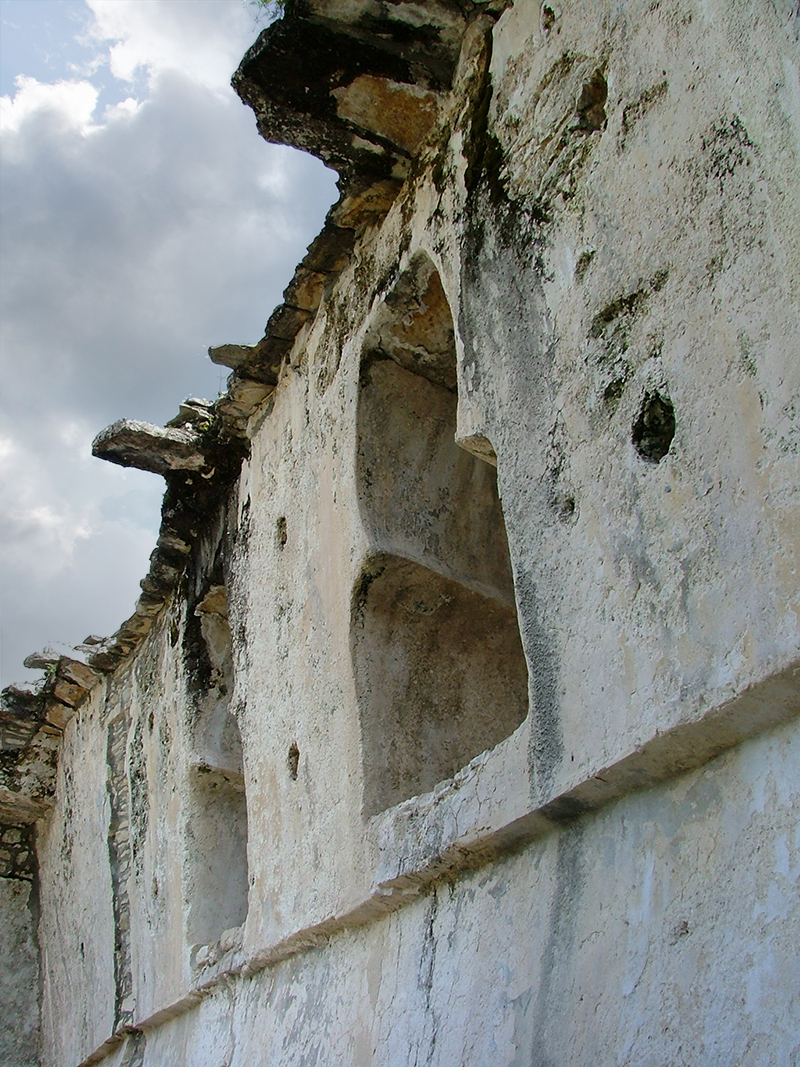
The look of the ruins at Palenque today is characterized by these keyhole shaped niches. Although never intended as external decoration, they appear when one side of an arch falls away and exposes the remaining interior wall to the outside.